 New Leaf Resources
Posts Tagged "Mental Health"
Gratitude in Difficult Seasons: 5 Simple Practices
December 15, 2025

The holidays are often described as joyful and bright, but for many people this season feels heavy. Stress rises, grief resurfaces, and the weight of expectations can leave us feeling drained instead of refreshed.
If this sounds like you, you’re not alone.
When life feels overwhelming, it’s easy to focus only on what hurts or what’s going wrong. Gratitude gives us another option. It doesn’t erase pain, but it helps us also notice what is still steady, kind, or hopeful in our lives.
Three Types of Gratitude
You can think about gratitude in three simple ways:
- Personal gratitude – noticing good things in your own life and circumstances (for example: a warm meal, a day off, or a safe place to sleep)
- Interpersonal gratitude – being thankful for what others do for you and telling them (for example: saying “thank you” to a friend who checked in)
- Intrapersonal gratitude – recognizing your own growth, strength, and values (for example: “I’m thankful I didn’t give up, even when it was hard.”)
The practices below touch all three: what is around you, who is with you, and how you’ve grown over time. Here are five simple ways to practice gratitude when life feels heavy.
1. Keep a Gratitude Journal: One Relationship, One Opportunity
Many people think a gratitude journal means writing a long list of “good things” every day. That can feel overwhelming.
Try this instead. Each day, write down just two things:
- One relationship you’re thankful for
- One opportunity you’re thankful for
Relationships remind you that you are not alone. Opportunities remind you that your life still has purpose and movement.
Your list might include:
- A friend who texted to check in
- A sibling who made you laugh
- The chance to work, volunteer, or care for someone
- A chance to rest or reset
Over time, this simple habit trains your mind to notice connection and purpose, even on hard days.
2. Remember the Hard Times You’ve Already Survived
It might feel odd, but looking back at hard seasons can actually build gratitude.
Think about a difficult time in your life: a loss, a conflict, an illness, or a season when you weren’t sure how you would make it through. Ask yourself:
- What has changed since then?
- How did I grow?
- Who showed up for me?
- Where do I see God’s care or help when I look back?
This isn’t about re-opening old wounds. It’s about noticing that you have faced hard things before, and you are still here. Seeing your own strength and growth can make the present feel a little more hopeful.
3. Help Someone Else in a Small, Practical Way
When we feel overwhelmed, our world can shrink down to our own pain and stress. Serving someone else, especially in a small way, can open that view back up.
You might:
- Send a short text of encouragement
- Write a note to someone who is grieving
- Drop off a meal or small treat
- Hold the door, offer a smile, or listen without rushing
These actions do not have to be big to matter. They can remind you, “I still have something to give.” That simple thought can increase your sense of gratitude and connection.
4. Say “Thank You” Out Loud
Gratitude often grows when we share it with other people.
Choose a few people in your life and thank them, out loud or in writing, for something specific. It might be:
- A spouse, child, or parent
- A friend or coworker
- A teacher, pastor, or therapist
- A neighbor, volunteer, or caregiver
You can say things like: “Thank you for listening to me this year.” “Thank you for showing up when I needed help.” “Thank you for your quiet kindness.”
When you express appreciation, the other person often feels seen and encouraged, and you may feel more connected and supported too.
5. Make Space for Mindful Meditation
Mindful meditation is a simple way to slow down and notice what is happening inside and around you.
You don’t need a perfectly quiet mind. The goal is to pause, pay attention, and gently bring your focus back when it wanders.
You can try a short practice like this:
Sit comfortably and take a slow breath in.
Notice one thing you can feel, one thing you can hear, and one thing you’re grateful for right now, even if it’s small.
As you breathe out, imagine letting go of a little bit of tension you’ve been carrying.
Repeat for a few breaths, gently bringing your attention back whenever your mind wanders.
Moments like this can help your body and mind settle. They remind you that even in a hard season, there are still small things that are steady and good.
A Gentle Reminder for Hard Seasons
Gratitude will not make every problem disappear. But it can help you see more than just what is painful. It gently balances the picture: the hard things and the helpful things, the losses and the support, the struggle and the signs of growth.
If this season feels heavy, you don’t have to face it alone. Support is available, and taking even one small step, like trying a gratitude practice or reaching out for help, can make a real difference.
If you’d like support, we invite you to reach out and book a session at New Leaf Resources.
Editorial Note: This article is adapted from a reflection originally written by Julie Salesman, Intake Specialist, and edited by the New Leaf Resources Marketing team.
Disclaimer: This article is for general educational purposes only and is not a substitute for professional counseling, diagnosis, or medical advice. Reading this post does not create a therapist–client relationship with New Leaf Resources. If you are experiencing significant distress, please reach out to a licensed mental-health professional. If you are in crisis or concerned for your safety, call 988 or your local emergency number right away.
Finding Balance: Self-Care & Connection During the Holidays
November 18, 2025
Finding Balance: Self-Care & Connection During the Holidays
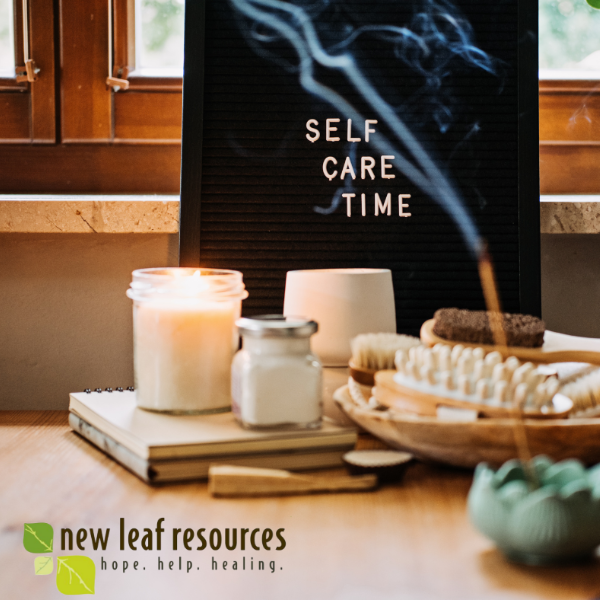
As we enter the holiday season, it can be easy to feel overwhelmed. Tabitha Griffith, one of our Individual and Family Therapists, shares some quick practical ideas for self-care and connection during this busy time.
Here are three areas where you can focus your energy to find balance:
1. Care for Your Physical Health
- Move Your Body: If the gym isn't for you, try getting involved in local recreational clubs to play pickleball, volleyball, basketball, walking clubs, or trying something new with an exercise class. This will utilize kinetic energy and release serotonin and dopamine (feel-good neurotransmitters).
- Boost Your Immunity: With less access to sunlight, supplementary vitamins like Vitamin C and D can go a long way to improving your immunity and your overall mood.
Balance Your Diet: Prioritizing nourishing foods helps us more enjoy the treat to later come.
2. Care for Your Mental Health
- Set Screen Boundaries: Have boundaries with your screen time. Consider replacing time in front of a screen with quality activities with your family, trying a new hobby, playing a game, or reading a book. This will tap into your creativity.
- Prioritize Mental Healthcare: Whether for present challenges or for maintenance, it's important to be intentional about viewing this as a necessity and not a luxury.
Let Others In: Connection and relationship are so important, even for us introverts!
3. Care for Your Spiritual Health
- Find Community: Get plugged into a great Bible-based church!
- Seek Solitude: Spend time in solitude with the Lord. This can be a car drive, journaling, or a morning coffee date over scripture with Him.
- Check Your "Input": Consider the kind of media, music, and entertainment we are intaking, and if it is not life-giving, make a swap for something that is!
Need support this season? Our therapists are here to help you find hope and balance. Call us at (219) 226-1810 or submit an inquiry here to request an appointment.
Source: This content is adapted from the New Leaf Resources Q4 2025 Newsletter.